
Endeavours
some endeavours.
Why
three things i keep turning over.
- i keep wandering into areas i don't know yet. a framework i haven't touched, some system someone built like a cathedral. i take a piece home and play with it.
- i don't like math treated as rigid. a system needs its rules to hold, but that's what makes it fun. the rules hold. so be loose everywhere else.
- i'm just a curious nerd with so many projects i ran out of disk space.
Side Quests
papers and other detours.
Shipped
out in the open.
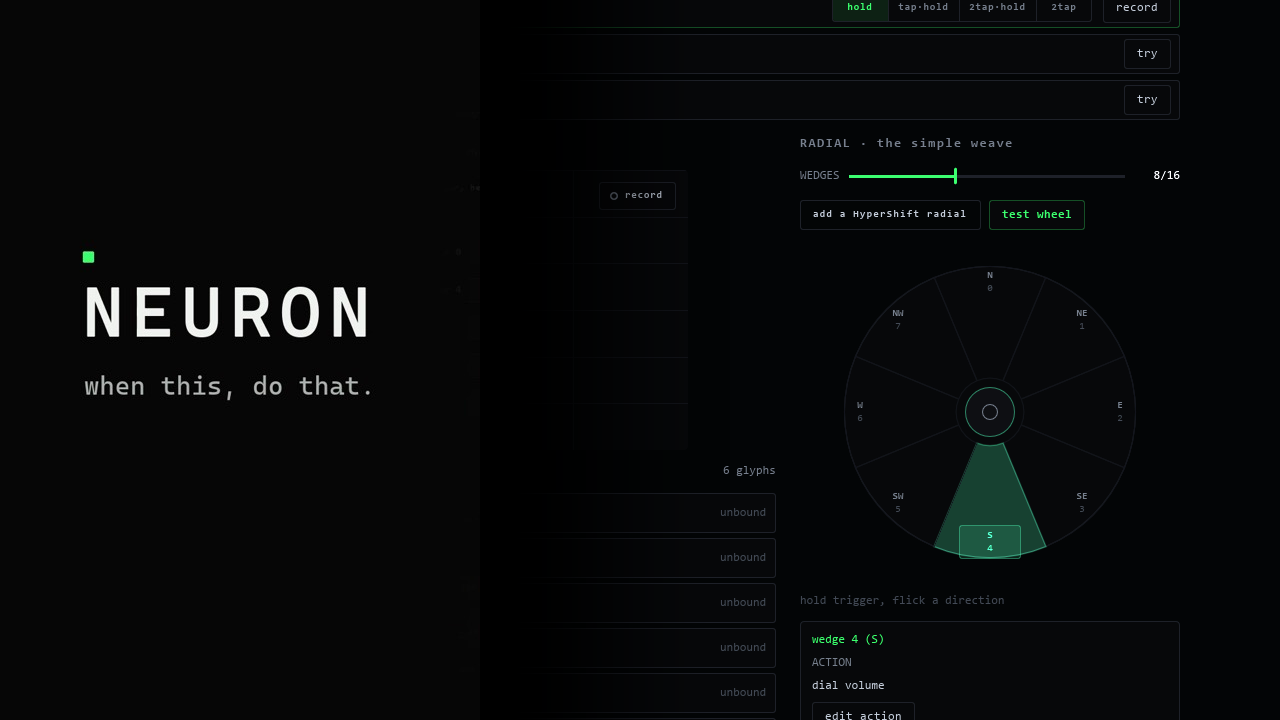
Neuron
· July 2026Your Razer hardware. Your rules.
My Rust replacement for Synapse, daily-driven on a Naga V2 Pro and BlackWidow Chroma V2. Device controls, reactive lighting, layers, profiles, button remapping, Python macros, radial menus and gestures. No account, cloud or telemetry.
A control layer built to grow beyond Razer. Free Windows 10/11 beta; other devices need their own testing.

Manifold
· April 2026Git desktop client. Your codebase is a manifold.
Change one file and it follows the nearby structure through a graph built from repository history. Heat spreads toward related files; curvature helps surface the bridges your architecture leans on.
Flutter, Dart, and a bit of spectral geometry.
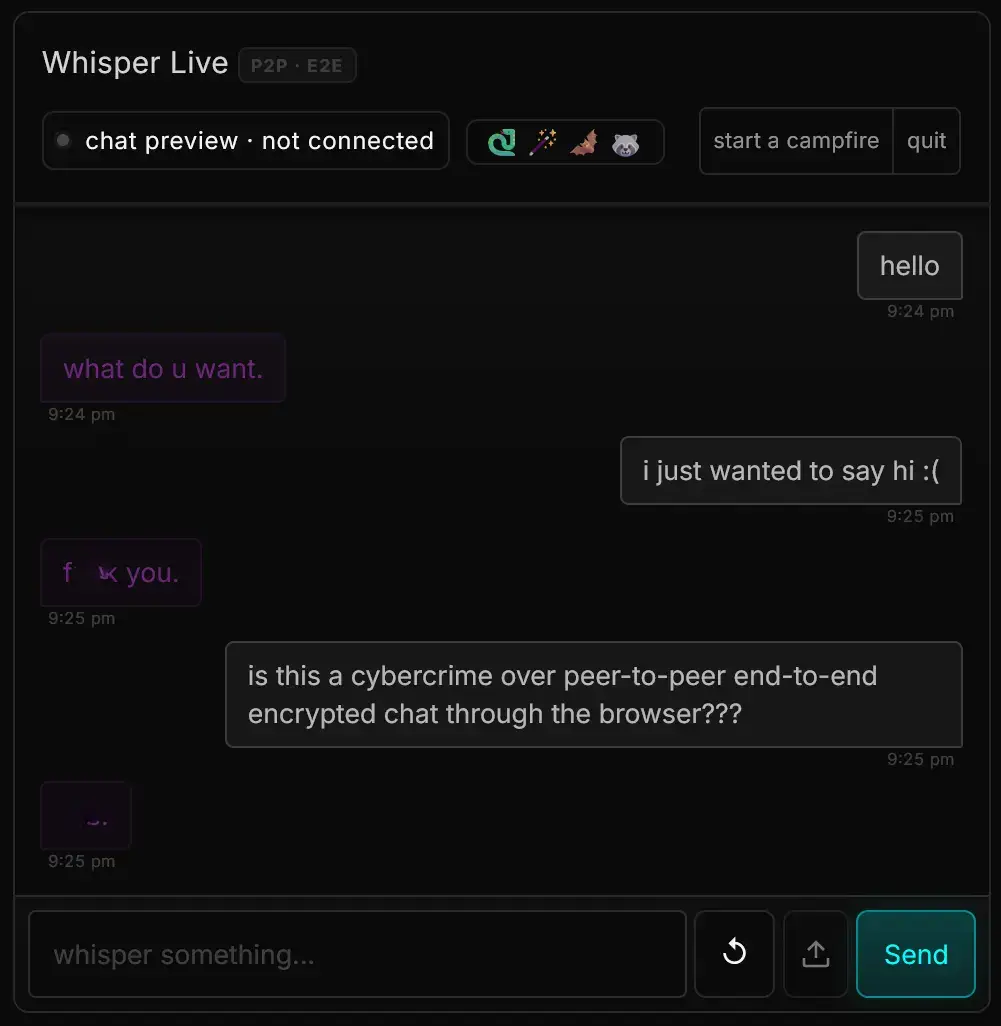
Whisper
· February 2026Encrypted communication over Möbius geometry, built in the browser.
Tuck an encrypted message inside an ordinary file, or open a peer-to-peer session protected with authenticated encryption.
Möbius-derived prediction shapes the codec; standard cryptography protects the message.
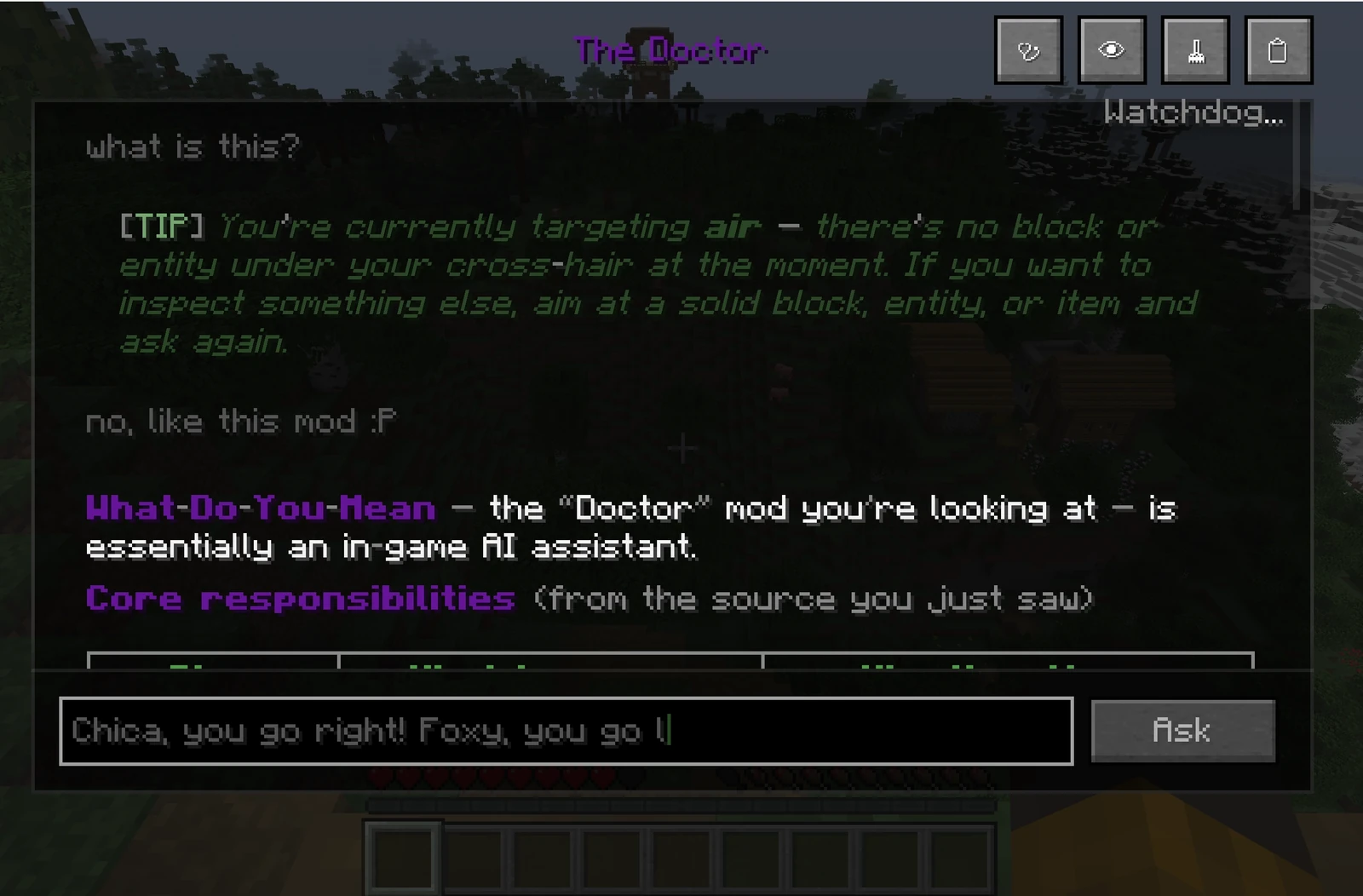
What Do You Mean?
· April 2026In-game agentic debugger for Minecraft, split between two agents.
The Doctor reaches into a running mod and rewrites its bytecode on the fly, setting soft breakpoints through a Condition Compiler wherever you need them. The Watchdog never touches a thing; it just keeps a quiet eye on the server's tick rate, waiting for the moment something slips.
A college capstone on Fabric 1.21, built test-first.
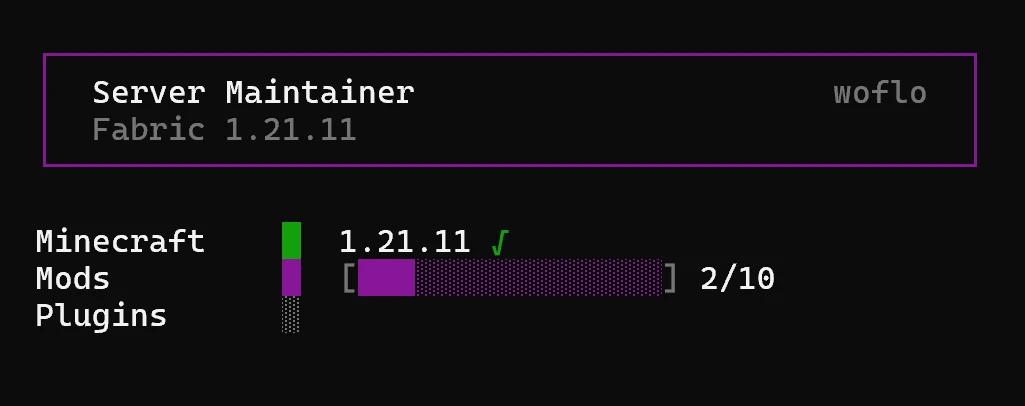
Minecraft Server Maintainer
· January 2026A 67KB jar that lives next to your server folder. Double-click it and walk away.
It keeps Minecraft, mods, plugins, and datapacks current, and after every update it checks the server still boots, rolling back anything that doesn't. Crash, and it brings itself quietly back, rate-limited so it never thrashes.
No Docker, no web panel, no subscription.

Morithon
· 2024Unreal Engine 5 death-run. 45 students, one semester.
Can you beat your friends?
In development
taking shape; not released yet.

Scryer
· May 2026 active researchExact mathematics for systems that guess.
Scryer gives a research agent exact mathematical objects to work with. The agent decides what to try; Scryer derives what it can, finds counterexamples, and sometimes leaves evidence you can replay.
The focus now is discovery: letting the agent use established results to choose its next question.
Scryer, served by Stithy · public research access
Both tokens can use every wolf.scryer.* tool. The choice is whether your input gets saved.
Connect your MCP client
Add the URL below as a remote MCP server. For its request header, use Authorization: Bearer <one of the tokens below>.
https://mcp.woflo.dev/stithy/mcpBase
question text not keptEvery Scryer tool, with a 30-second deadline and a shared compute budget. Stithy counts and times each call without storing your question.
ShiDbSvjRaU5AzILXvNm9EEf5trSm7i83k5C4C6cjhUjSvRRContributor
question text keptYour full input is saved to help improve Scryer. You get a 120-second deadline, more memory and higher queue priority.
ncLjQGT6DFhpnJqe4EZSDn232c7m35PcLtYJYVWPHo2NyJ0pThe tokens may be revoked if they're abused.
want your own token? contact me
Once connected, your MCP client can list Scryer's tools. Stithy logs the tool, timing and outcome of every call. It doesn't log IP addresses. Base discards the input. Contributor keeps it. Seeing where Scryer gets stuck helps guide the work.